

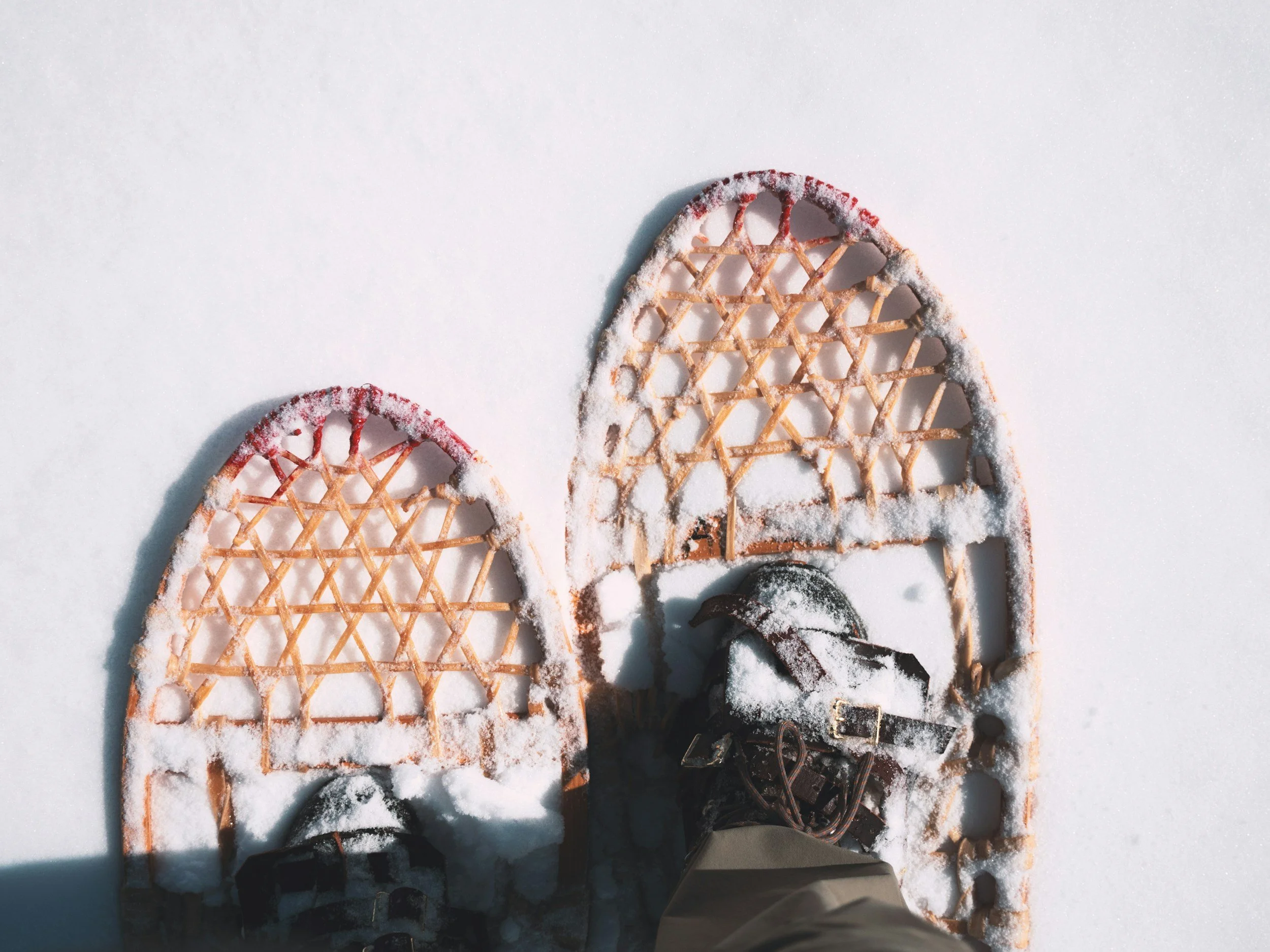
Snowshoeing is one of the oldest forms of winter travel in human history. Today, it remains one of the most accessible winter outdoor activities for people looking to explore snowy landscapes without skiing or snowboarding. From its Indigenous roots as a survival tool to its modern role in recreation, fitness, and guided winter adventures, snowshoeing tells a powerful story about adaptation, innovation, and our relationship with winter.
At Outdoor Mavens, we believe understanding the history behind outdoor activities like snowshoeing deepens our connection to the landscapes we explore and helps lower the barrier to entry for winter recreation.
The Origins of Snowshoeing:
The history of snowshoeing dates back more than 4,000–6,000 years and developed independently across multiple regions of the Northern Hemisphere as an essential form of winter travel. Indigenous peoples of North America, Central Asia, and Northern Europe all created variations of snowshoes to solve the same problem: how to move efficiently across deep snow without sinking.
In North America, many Indigenous tribes—including the Cree, Ojibwe, Huron, and Algonquin—developed snowshoes specifically adapted to their local terrain and snow conditions. Long, narrow snowshoes were ideal for open forests and plains, while shorter, wider designs worked better in mountainous or densely wooded areas.
For these communities, snowshoes were essential tools for:
Hunting and tracking animals
Winter travel between villages
Gathering firewood and supplies
Trade and communication routes
Snowshoes were not recreational—they were survival equipment, often handmade with deep cultural knowledge passed down through generations.
Early Snowshoe Materials and Traditional Snowshoe Design
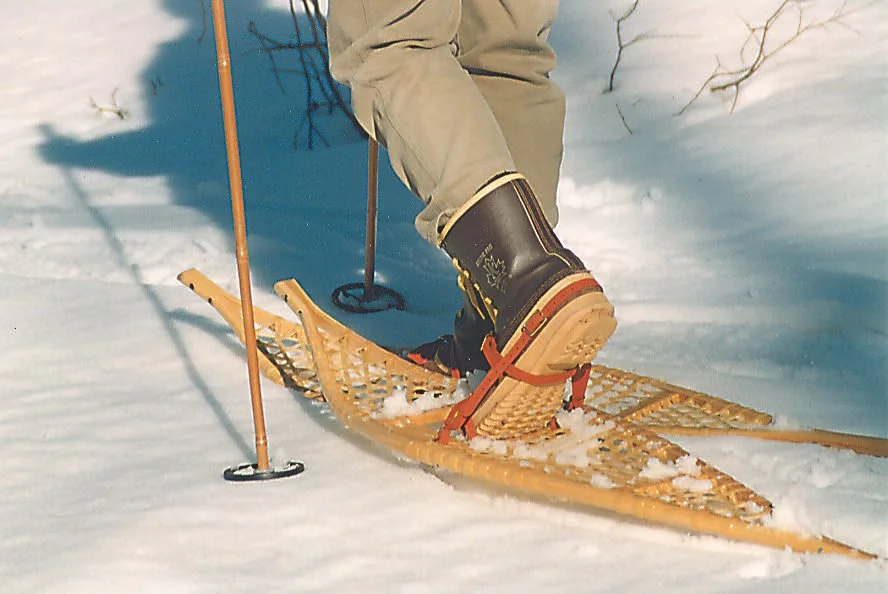
Traditional snowshoes were crafted entirely from natural materials, and their design directly influenced how modern snowshoes function today:
Frames: Bent wood, often ash or birch, shaped using steam
Lacing: Rawhide or animal sinew woven into intricate patterns
Bindings: Leather straps secured footwear to the frame
These designs were remarkably effective. The webbing distributed body weight across a larger surface area, allowing travelers to “float” on snow rather than sink. Different weaving patterns also controlled snow buildup and grip.
Snowshoeing in European Exploration, Trade, and Military Travel
When European explorers and settlers arrived in North America, they quickly adopted snowshoes from Indigenous peoples. Fur trappers, traders, missionaries, and soldiers relied on them to travel through harsh winters.
Snowshoes played a key role in:
The fur trade
Military operations in winter climates
Exploration of northern and mountainous regions
By the 18th and 19th centuries, snowshoeing had spread beyond survival and work. Snowshoe clubs began appearing in Canada and the northeastern United States, marking the beginning of snowshoeing as a recreational and social activity.
The Evolution of Snowshoe Materials and Technology
The biggest shift in snowshoe design occurred in the 20th century. As manufacturing techniques advanced, snowshoes transitioned from handcrafted wood frames to mass-produced models.
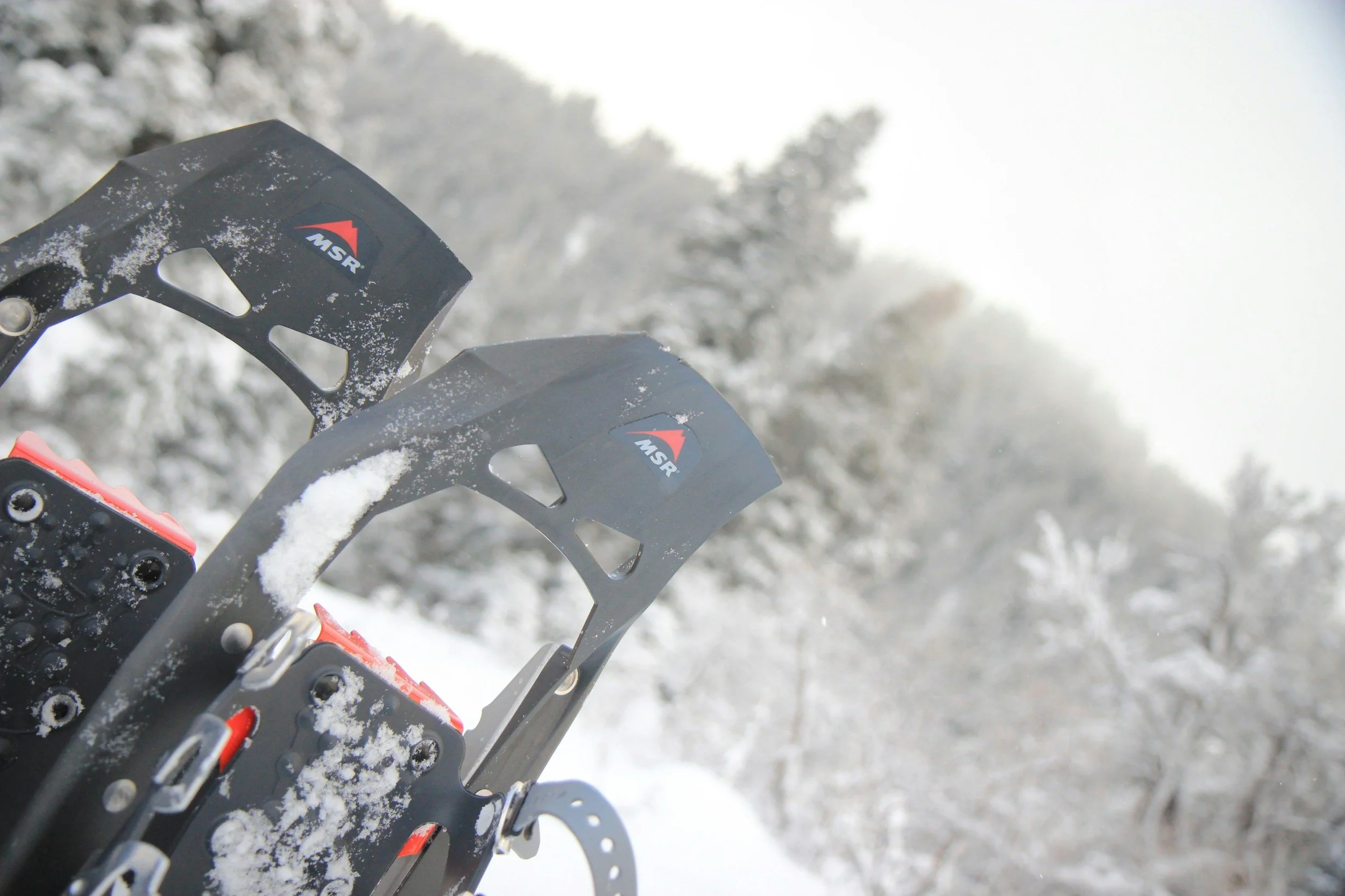
Aluminum frames: Lighter, more durable, and easier to mass-produce
Synthetic decking: Replaced rawhide with waterproof, weather-resistant materials
Steel crampons: Added traction for icy or steep terrain
Today’s snowshoes are highly specialized and designed for different uses:
Recreational snowshoes: Lightweight, user-friendly, ideal for beginners
Backcountry snowshoes: Aggressive traction and flotation for deeper snow and steeper terrain
Running snowshoes: Minimalist designs for packed trails
Bindings have also evolved to allow for quick entry, better comfort, and compatibility with winter boots.
How Snowshoeing Is Used Today
Snowshoeing has transformed into a versatile winter activity enjoyed by people of all ages and experience levels, and it is often considered one of the easiest ways to get started with winter hiking. Unlike skiing or snowboarding, snowshoeing requires minimal technical skill, making it one of the most approachable winter sports.
Today, snowshoes are commonly used for a wide range of winter outdoor activities, including:
Winter hiking and trail exploration
Fitness and low-impact cardio workouts
Wildlife tracking and photography
Backcountry travel and avalanche education
Guided group outings and retreats
Snowshoeing also provides access to snow-covered landscapes during seasons when hiking trails would otherwise be inaccessible.
Snowshoeing, Winter Trails, and Conservation
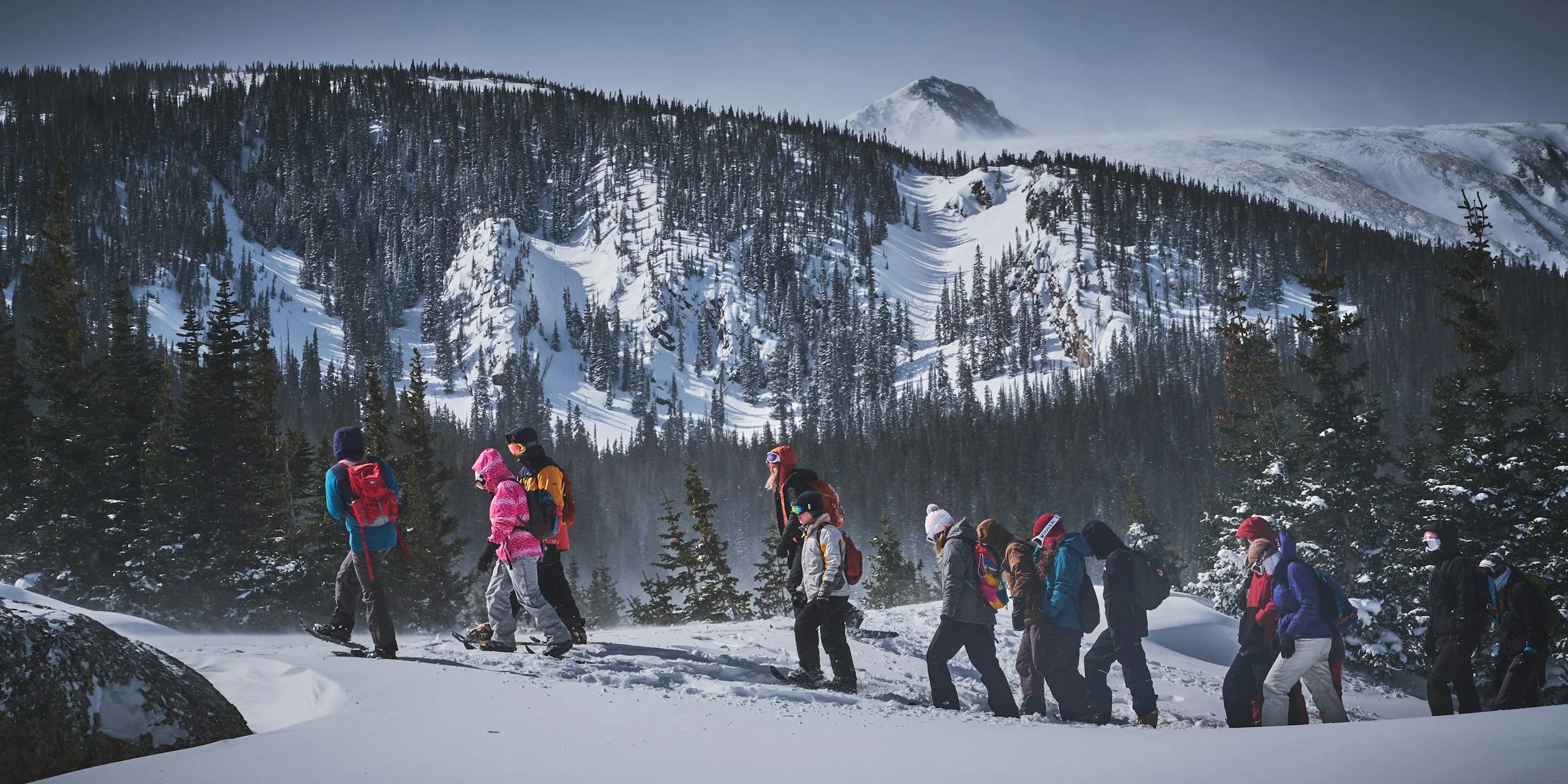
Modern snowshoeing often intersects with land stewardship and environmental awareness. Many snowshoers use established winter routes to minimize impact on vegetation and wildlife, and guided experiences frequently incorporate Leave No Trace principles.
At Outdoor Mavens, guided snowshoe tours are about more than movement—they’re about slowing down, noticing winter ecology, and fostering respect for cold-weather environments while recreating responsibly.
Why Snowshoeing Still Matters Today
From Indigenous innovation to modern outdoor recreation, snowshoeing has endured because it works. It connects us to ancient knowledge, allows us to experience winter landscapes responsibly, and removes barriers to getting outside during colder months Winter doesn’t have to mean staying indoors!
Looking to try snowshoeing this winter? Outdoor Mavens offers guided snowshoe tours, winter hiking experiences, and inclusive outdoor adventures designed to meet you where you are—no prior experience required. Our trips are ideal for beginners, travelers, and anyone looking to explore winter landscapes with confidence.
